
How to hang a framed print level, centered at 57 inches
Centre the picture at 57 inches, mark before you drill, and let a level do the arguing.
Hang the picture so its center sits about 57 inches from the floor, mark that height on the wall with a light pencil line, work out where the hook goes from the frame’s own measurements, and check it with a level before you commit to a second hole. That is the whole job. The rest of this guide is how to do it without the drill-and-pray session.
Why 57 inches
Fifty-seven inches is a common gallery convention for the center of a picture, roughly eye level for an average standing adult. The site’s own note on the hanging kit puts it bluntly: centre line at 57 inches. Treat it as a starting point, not a law. It is a convention, and your ceiling, your furniture and your height are all allowed to have opinions.
The number refers to the middle of the artwork, not the top of the frame and not the hook. People who hang the top edge at 57 inches end up with art that looks like it is trying to leave through the ceiling.
Adjust for the room
The convention works best on an open wall. Once furniture shows up, the picture is part of a group, and the group needs to read as one thing.
- Over a sofa or sideboard: the frame should relate to the furniture, not float far above it. A common rule of thumb is to leave a modest gap above the furniture, and if that pushes the center well above 57 inches, you have probably chosen a frame that is too small for the wall.
- Low ceilings: staying near 57 inches can make a tall frame feel crowded at the top. Hang it a touch lower and step back to check.
- Seated rooms: in a dining room or a lounge where people sit most of the time, a slightly lower center often looks right. This is judgment, not a rule, so look at it from where people actually sit.
- Stairways and hallways: the wall slopes with the stairs, so pick the height at the spot where people stop and look, not at the top or bottom.
If the frame looks wrong at 57 inches, it is usually a size problem rather than a height problem. The wall fitter is the place to check print size against the actual wall instead of guessing.
Mark the center line first
- Measure your frame. Write down the height and width. Tape measure, not memory.
- Pick the center point. Decide where the middle of the picture goes horizontally (the center of the sofa, the center of the wall, the center of the gap) and make a small pencil tick at 57 inches up from the floor.
- Find the hook offset. Hold the frame face down, pull the hanging wire taut toward the top as it would sit on the hook, and measure from the top edge of the frame down to the wire. For a sawtooth hanger, measure to the notch instead.
- Do the arithmetic. Half the frame height, minus the wire drop, gives how far above your center tick the hook goes. Mark that spot. Write the sum on a scrap of paper if you do not trust yourself at this hour.
- Dry-run with tape. Cut a piece of paper to the frame size, tape it up with the center on your tick, and look at it from across the room. Paper is cheap. Wall repair is not.
Use a level, and use it twice
The trouble with a hook is that a picture can hang perfectly level on a crooked wall or crooked on a straight one. Put the level on the pencil mark before you set the hook, and again on the top of the frame after it is hanging.
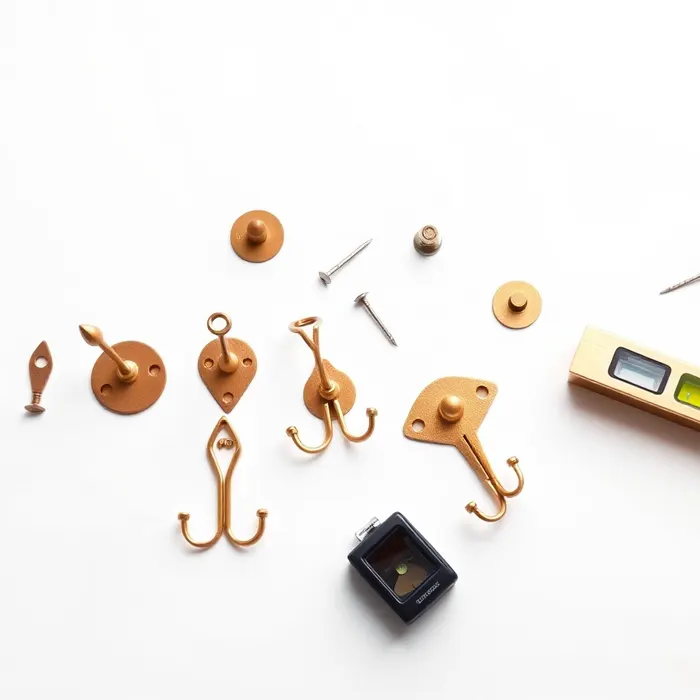
The picture hanging kit is listed on the site as a kit plus a level, which covers both the hardware and the level in one box. Check the selected variant and size before ordering, and read what is actually in the kit, since contents can differ between versions.
A few habits that save holes:
- Draw a short, faint horizontal pencil line through the hook mark, not just a dot, so you can lay the level on it.
- Hang the frame, then nudge the bottom corner until the bubble settles. A frame hanging from a single hook will swing and can settle a degree off, so check it after it stops moving.
- Fix it, then step back. Level and looks level can differ if the floor, a shelf or a window frame is slightly off. When the room has a strong line nearby, your eye will compare against that, so decide which one wins.
Hardware and weight: follow the label
Every hook, nail, screw and anchor carries its own rating for how much weight it should hold, and that rating depends on the wall behind it. This guide does not give weight limits, wall types or stud advice, and ArtToGogh has not tested any hardware. Follow the rating printed on the hardware you buy, check it against the weight of your framed piece, and if the wall is a mystery, ask the person who installed it or a local hardware shop.
When in doubt, choose hardware rated well above what the frame weighs. Glass in a large frame adds up quickly.
The other option: lean it
Plenty of rooms look better with a picture on a shelf, a mantel or the floor, leaning against the wall. It is quick, it is reversible, and nobody has to find a drill. The tradeoff is that a leaning frame can slide, especially on a smooth shelf or if someone brushes past.
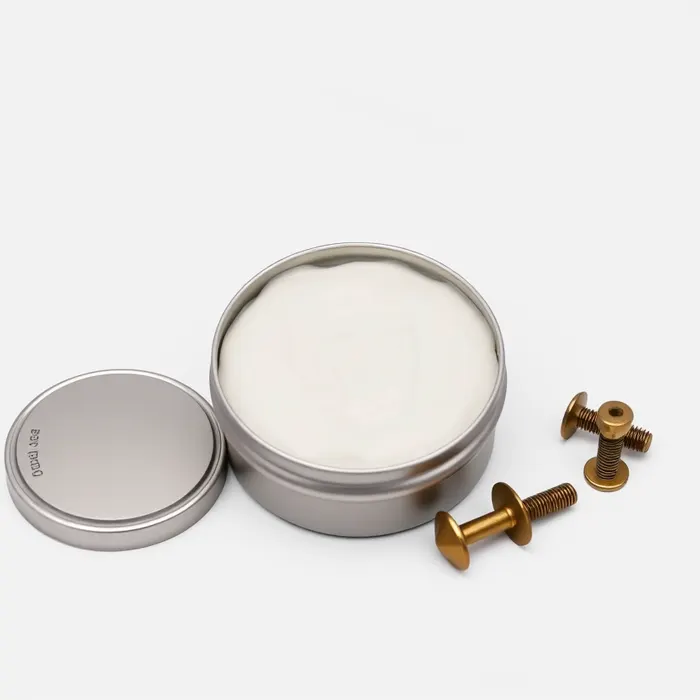
Museum putty is a basic way to help keep a leaning frame from slipping. The site’s own note says to check the material and weight rating before using it, and that is good advice: putty can mark some finishes, and it is not a substitute for proper hanging hardware on anything heavy. Test it on a hidden spot of the shelf first, and use the product’s own instructions.
Leaning also changes the height question. With nothing to measure from, pick the spot where the center of the picture lands around eye level for the room, then step back and see if it reads.
Pick the print, then the wall
If you have not chosen the picture yet, pull up the free board. A wide work like The Great Wave off Kanagawa wants a long wall and a horizontal frame. Frame options are collected on the frames page. Sizing the picture to the wall comes before hanging it, and it is the step people skip.
FAQ
Is 57 inches measured to the top of the frame? No. It is the center of the picture, measured from the floor. Find the middle of the frame, put that at 57 inches, then work out where the hook goes from the wire or hanger.
What if I have a very tall ceiling or very low furniture? Treat 57 inches as a starting point and judge from across the room. Over furniture, the picture should relate to the piece below it. If the result looks off, a different frame size often helps more than a different height.
How much weight can the hook hold? That depends on the hardware and the wall, and this guide does not state a number. Follow the rating on the hardware you buy and compare it with the weight of your framed piece.
Is museum putty safe for a leaning frame? The site’s note says to check the material and weight rating before using it. Try it on a hidden spot first, and do not rely on it for heavy frames.
Do I need a level if I use a kit? A level is the part that makes the picture look straight. The hanging kit on the site is listed with one, but check the selected variant to confirm what is included.
Gear named in this guide
Buying links are affiliate links; see the disclosure. Amazon is the seller of record and sets price, shipping and availability. Check the selected variant before ordering.
 Illustration
Picture Hanging Kit + Level
Crooked art is worse than no art. Centre line at 57 inches. Every gallery on earth uses that number.
 Illustration
Museum Putty, 2.64 oz
A basic way to help keep a leaning frame from slipping. Check the material and weight rating before using it.