
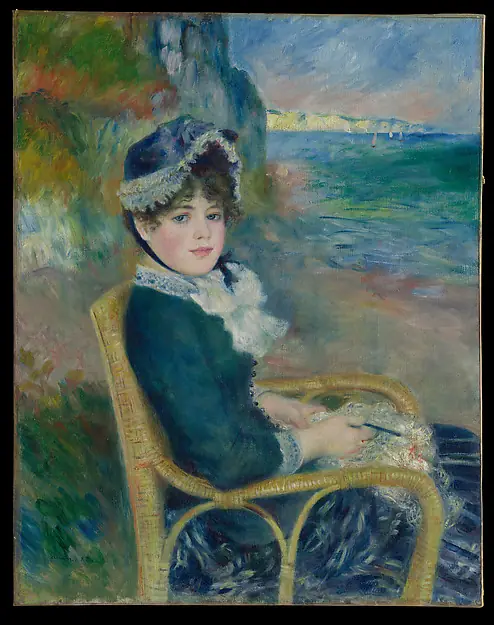
 By the Seashore1883Free · sharp to 10×13 in
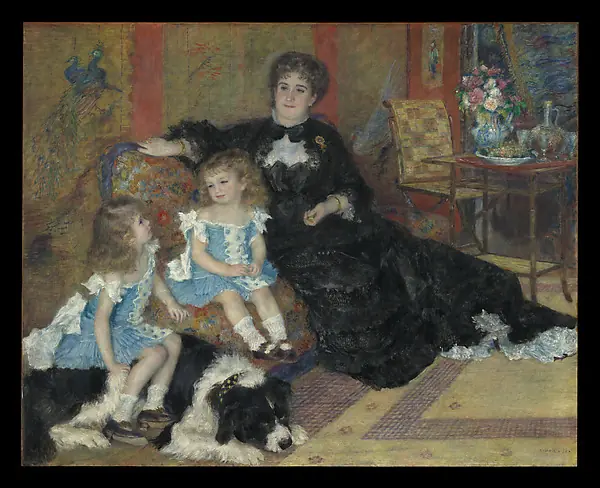 Madame Georges Charpentier (Marguerite-Louise Lemonnier, 1848–1904) and Her Children, Georgette-Berthe (1872–1945) and Paul-Emile-Charles (1875–1895)1878Free · sharp to 13×10 in
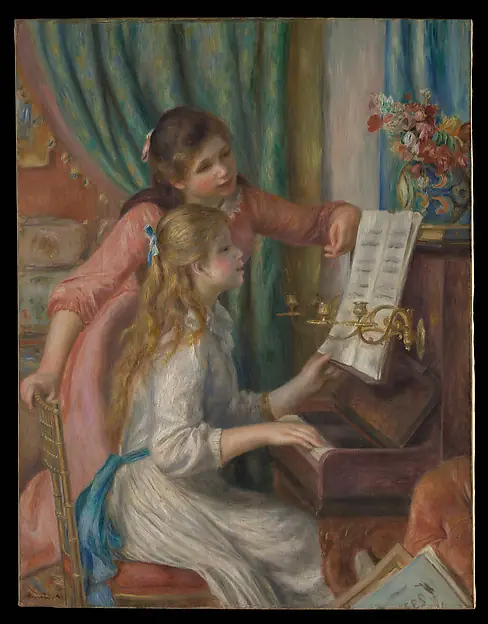 Two Young Girls at the Piano1892Free · sharp to 10×13 in
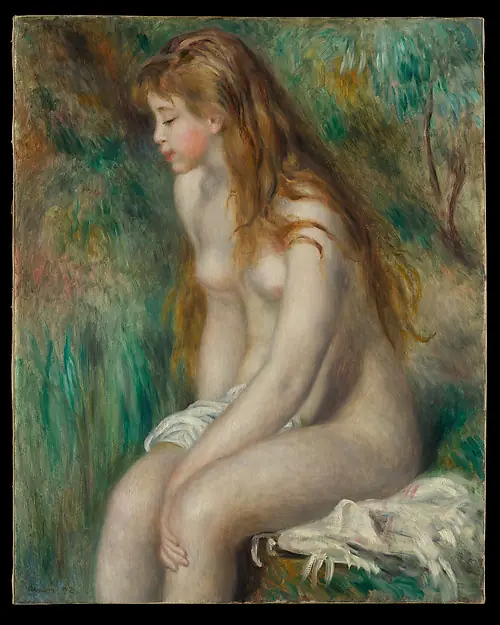 Young Girl Bathing1892Free · sharp to 10×13 in
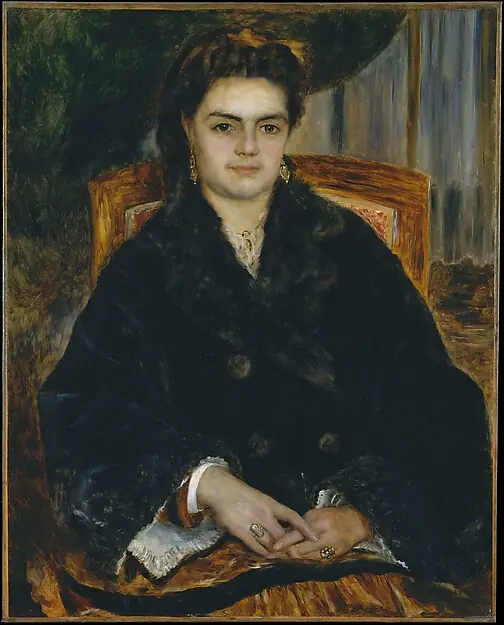 Madame Édouard Bernier (Marie-Octavie-Stéphanie Laurens, 1838–1920)1871Free · sharp to 10×12 in
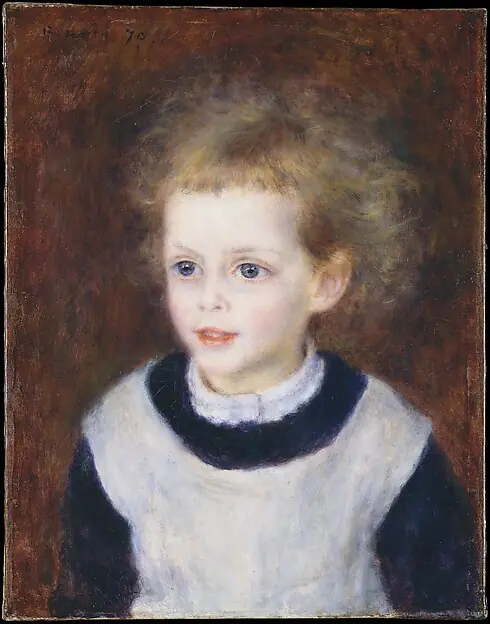 Marguerite-Thérèse (Margot) Berard (1874–1956)1879Free · sharp to 9×12 in
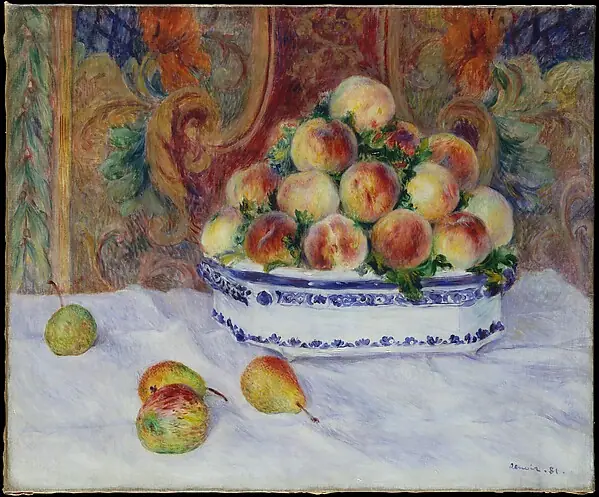 Still Life with Peaches1881Free · sharp to 12×10 in
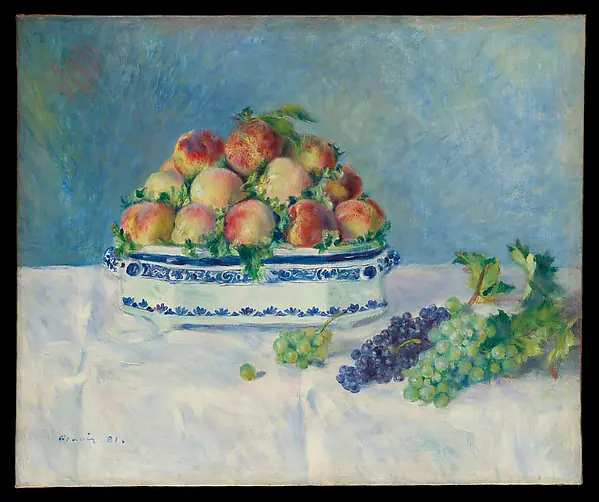 Still Life with Peaches and Grapes1881Free · sharp to 13×11 in
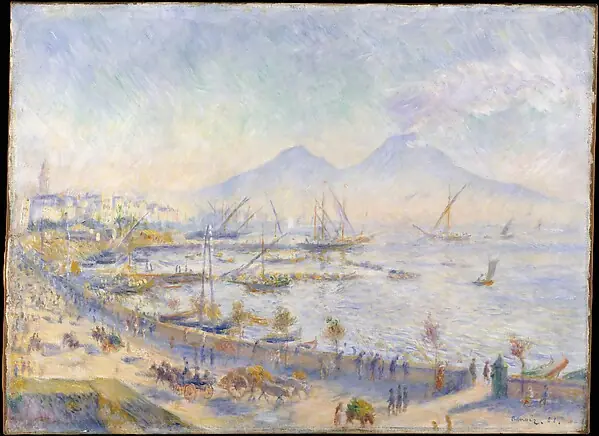 The Bay of Naples1881Free · sharp to 12×9 in
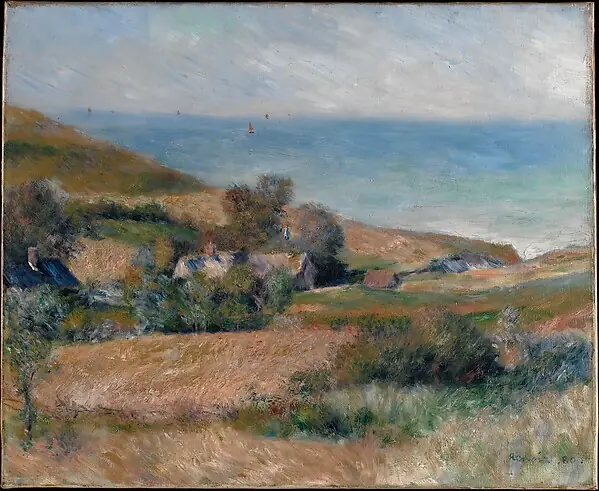 View of the Seacoast near Wargemont in Normandy1880Free · sharp to 12×10 in
Reading the board
Each card shows the largest print the Met's file makes at 300 dpi without cropping — that's the sharpness you'd want for something you'll stand close to. The biggest file in this set isStill Life with Peaches and Grapes, at 4,000 × 3,353 pixels: enough for a 13.3 × 11.2 in print at 300 dpi, or 26.7 × 22.4 in at poster sharpness.
The Met flags 4 of these as a collection highlight: By the Seashore, Madame Georges Charpentier (Marguerite-Louise Lemonnier, 1848–1904) and Her Children, Georgette-Berthe (1872–1945) and Paul-Emile-Charles (1875–1895), Two Young Girls at the Piano and Young Girl Bathing.
Every page has a size chart against standard frames, the museum record, and the frame and light that make a print look like it cost more than it did. The file itself is free. It always was.